Sad Girls You’re Sleeping On:
Brody Dalle
VANESSA DAME
At first, I was fascinated by her unmistakable voice, guitar playing, striking beauty and iconic style. But it was the vulnerability in her writing, buried beneath anger and agony, that made me truly fall in love with Brody Dalle’s art.
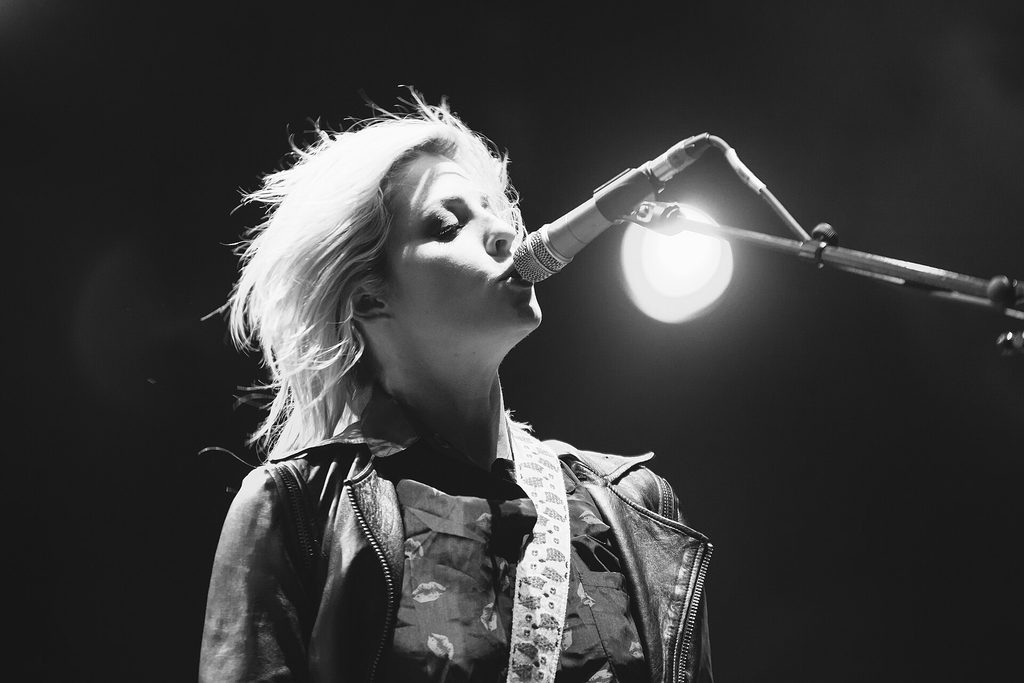
Dalle performing at the Highfield Festival in 2014
To this day, she remains one of my favorite singer-songwriters and guitarists in modern music. Her songs create the kind of imagery that puts its fingers directly into the open wound and refuses to look away.
Born in Melbourne, Australia, Dalle has spoken openly about a difficult childhood. Growing up with her mother and sister, she began making music at a young age, eventually fronting the teenage punk band Sourpuss. In her late teens, she moved to Los Angeles. Not long after, she formed The Distillers. While the band would go through several line-up changes over the years, Dalle remained its defining force and only constant member.
I first discovered The Distillers in my late teens. By then, I was no stranger to hardcore music, but I had never been particularly immersed in the punk scene. Somehow, that only made my attraction to her art more compelling.
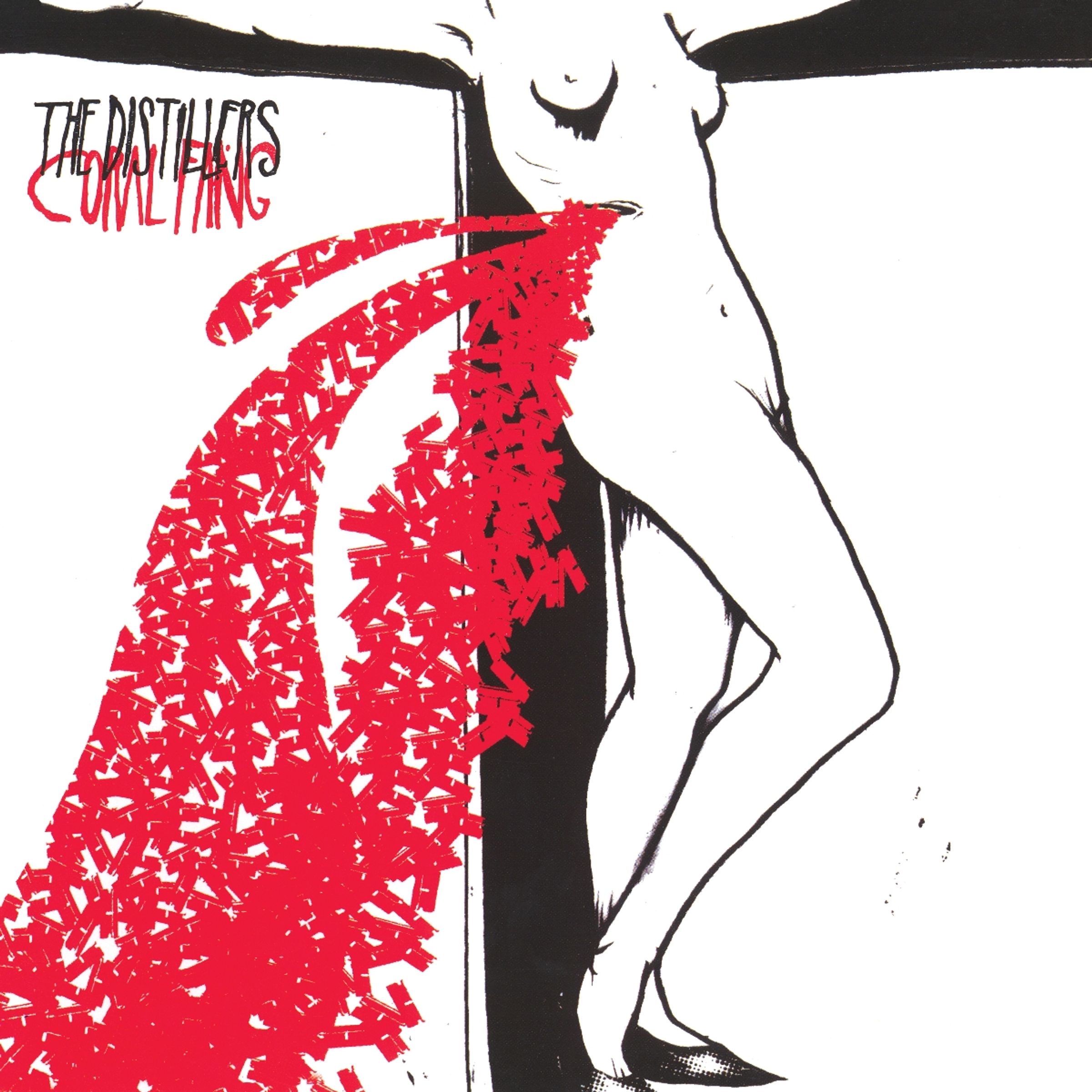
While The Distillers’ first two albums had already cemented the band’s place in punk, it was with Coral Fang (2003) that Dalle began to move in a different direction and, more importantly, opened herself up. The raw intensity was still there, but Coral Fang gave it something it hadn’t had nearly as much room for before: a certain kind of softness I hadn’t yet heard from Dalle. Melancholic melodies suddenly sat beside distorted, grunge-inflected guitars, and Dalle allowed her rasp to give way to moments of surprisingly tender, melodic singing. The record didn’t soften her edges so much as reveal what had always been underneath them. You could already see that collision of vulnerability and violence in the album’s iconic cover art: a female body on a cross, sliced open and bleeding. The artwork proved controversial, and an alternative cover was produced after major U.S. retailers refused to carry the original.
Written amid the dissolution of her marriage to Rancid frontman Tim Armstrong, a split that sent shockwaves through parts of the punk and alternative scene at the time, Coral Fang feels like a purge. When I listened to the album for the first time, I felt as if Brody opened her arms, wrapped them around me, and we jumped off the edge together.
And over two decades later, I still don’t know where I landed.
“Hold on to the memory
Yeah, it’s all you got
I know you’ll be there
To soak up blood lost
Blood lost, blood lost”
— “The Hunger” from Coral Fang, 2003
The controversial cover of the album “Coral Fang”, published in 2003
The memory she asks us to hold onto here isn’t clean or sentimental. It is bodily and violent. Something worth clinging to even while it bleeds. Perhaps this is where I first learned how many shapes a Sad Girl can take. And Dalle’s just happened to come with a fucking guitar and that growl.
Spinnerette: A new beginning
When The Distillers split around 2006, I felt a sting in my heart. For a moment, I feared it was the end of me being able to consume more of Dalle’s art.
In 2003, she began dating Queens of the Stone Age frontman Josh Homme, whom she would later marry. This turned out to be a massive scandal, with fans of Armstrong and Rancid targeting both Homme and Dalle. Brody in particular faced vicious misogynistic commentary that painted Armstrong as the victim. But amid all the controversy, there she was, pregnant and glowing, seemingly entering a new chapter of her life. And musically, a new chapter was taking shape, too: Spinnerette. It was a much more experimental take on alternative rock, yet it remained distinctly hers.
Spinnerette’s self-titled album was darker, more sensual and had a certain groove to it, while still fitting into the alternative rock landscape of the late 2000s, alongside bands like Yeah Yeah Yeahs. Fuzzy guitars met electronic textures, hypnotic rhythms and moments that felt dreamy. It also showed Dalle’s love for 80s new wave and punk artists such as Devo. I listened to the album, released in 2009, again and again.
Sadly, some former fans of The Distillers, including those who had already criticized Coral Fang for “not being punk enough,” completely turned their backs on Dalle and Spinnerette. But for others, like me, who had never been strictly bound to the hardcore punk scene, it only drew us closer to her. The album, along with a handful of standalone tracks, moved beautifully between more upbeat moments and the honesty that had always been present in her writing. This time, though, there was something different underneath it. Dalle seemed to be coming to terms with her past, her struggles with substance abuse and her own maturity.
“Fall into an abyss
Won’t you give me just one last kiss
Valium knights in my bed
Only now he’s a vagrant in my head
Golden love is holding on
Holding on to what we had before”
— “Valium Knights,” by Spinnerette, EP 2008
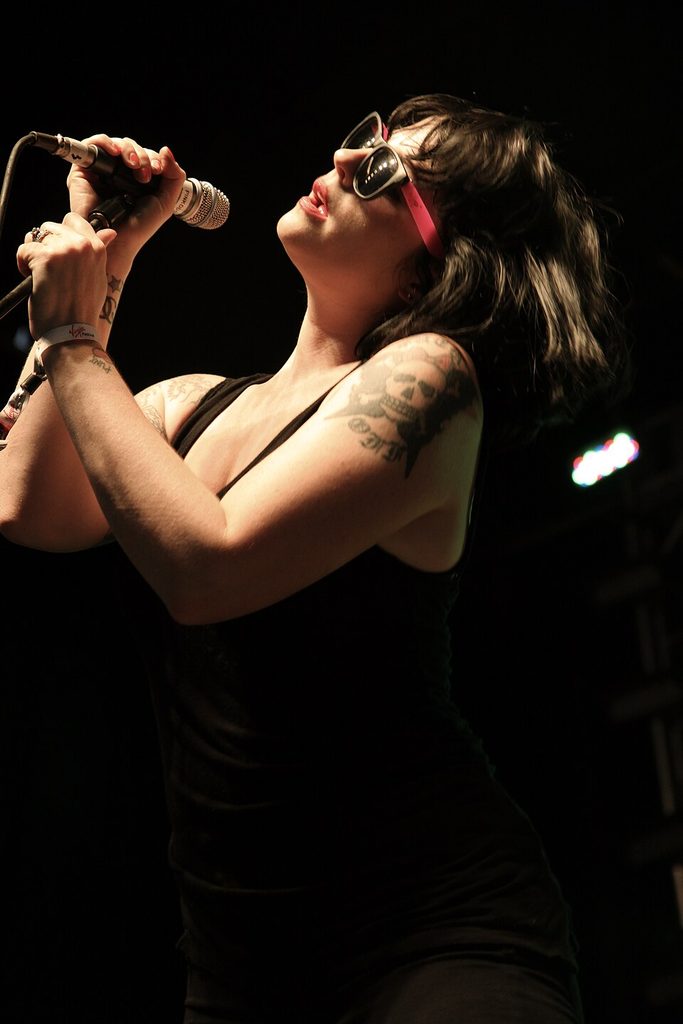
Brody Dalle playing with Spinnerette at the 2009 Deer Lake Virgin Festival
Throughout her career, Dalle’s music was repeatedly discussed in relation to the men she was involved with. First came the comparisons to Tim Armstrong and Rancid, and later, with Spinnerette, to Josh Homme and Queens of the Stone Age. As though her own musical identity couldn’t possibly exist independently of either man. In a 2009 interview with Rolling Stone, Dalle spoke openly about her reluctance to collaborate with musicians from Homme’s circle, fearing that her work would once again be attributed to someone else. “For anyone to say that so-and-so wrote my music is disgusting,” she said.¹
It is particularly frustrating considering that Dalle had already established herself as a songwriter and musician long before Spinnerette. Yet even as her sound evolved, she was still expected to defend the authorship of her own work.
Maternal Rage, Reunions and Quiet Battles
In 2014, Dalle returned with her first true solo album, Diploid Love. Her writing and production felt like a natural progression from The Distillers through Spinnerette. Some of the destructive anger of her youth had shifted toward motherhood, survival, maturity and a raw kind of maternal rage. Tracks like “Meet the Foetus / Oh the Joy,” featuring Garbage frontwoman Shirley Manson, move through the almost bodily horror of pregnancy and an anxiety only a mother can feel, before turning into a celebration of life accompanied by a painful melancholy. On “I Don’t Need Your Love,” Dalle settles an old score with her absent father.
For a brief, beautiful moment, it felt like the world was finally giving Brody Dalle her flowers as a standalone artist. And when The Distillers announced their reunion in 2018, playing packed, sweat-drenched shows for old fans and a new generation discovering them for the first time, the future seemed bright. But as any true Sad Girl knows, healing is never a straight line.
In recent years, the noise around Dalle has turned into something darker and painfully personal. Her extraordinarily bitter divorce and custody battle with Homme played out publicly through courtrooms, competing allegations and tabloid headlines. Eventually, Dalle was separated from her children for extended periods of time, a separation that, judging by her Instagram posts, continues to this day. It is a devastating chapter of her life that shouldn’t be silenced in shame or exploited for clickbait. And it shouldn’t become yet another chapter in which Brody Dalle is discussed primarily through the man she was married to. Because this story was never supposed to be about him. It was always about her art.
Brody Dalle has largely stepped back from the chaos of the industry, leaving her fans and the alternative scene waiting in the shadows. But we aren’t just waiting for another tour announcement or a new album. Her fans are waiting with her, for her peace. If her musical legacy has taught us anything over the past two decades, it’s that Brody Dalle knows how to survive the wreckage. She has shown a whole generation of girls that you can be broken, bleeding and utterly exhausted, and still be the most powerful force in the room.
Wherever you are right now, Brody: we aren’t sleeping on you. We are listening. And we are holding on to the memory.
THE BRODY DALLE SAD GIRL LISTENING LIST
- The Hunger
- The Gallow Is God
- Love is Paranoid
- For Tonight You’re Only Here to Know
- Distorting a Code
- Bury My Heart
- Valium Knights
- A Spectral Suspension
- Driving Song
- Meet the Feetus / Oh the Joy
- I Don’t Need Your Love
- Blood in Gutters
¹ Steve Appleford, “Brody Dalle on Spinnerette, the Breakup of the Distillers and Hubby Josh Homme,” Rolling Stone, March 20, 2009
Image credits:
Brody Dalle at Highfield Festival, 2014. Photo by Henry W. Laurisch, via Wikimedia Commons, CC BY-SA 4.0.
Coral Fang (2003), The Distillers. Original cover artwork by Tim Presley. Sire Records. Reproduced for the purpose of critical commentary under § 51 UrhG.
Brody Dalle performing with Spinnerette at Deer Lake Virgin Festival, 2009. Photo by SylviaBoBilvia, via Wikimedia Commons, CC BY 3.0. Cropped/edited by Sad Girl Zine.